Most homeowners think about air conditioning in terms of supply vents. They notice the cool air coming out, check whether the airflow feels strong, and pay attention to how fast rooms cool down. That makes sense because supply vents are the visible part of the system. Return air design is different. It stays mostly out of sight, so people rarely think about it until comfort problems start showing up.
Yet return air design plays a huge role in how well an AC system controls indoor temperature. A cooling system does not just push air into rooms. It also has to pull indoor air back through the return side so it can cool that air again and send it back out. That loop needs balance. Once the return side falls short, the system starts losing control faster than most homeowners realize.
Homes with poor return air design often struggle with uneven cooling, longer run times, stuffy rooms, and comfort that changes from one area to another. In many cases, the air conditioner itself may still work, but the system loses its ability to keep the house stable because the airflow loop is incomplete.
Understanding how return air affects cooling control can help explain why some homes never seem to feel as comfortable as they should, even when the AC seems to be running constantly.
Contents
- 1 What Return Air Actually Does
- 2 Why Poor Return Air Design Causes Fast Comfort Loss
- 3 Rooms Need a Way to Give Air Back
- 4 One Central Return Is Not Always Enough
- 5 Poor Return Design Makes Airflow Feel Weak
- 6 Poor Return Air Design Increases Pressure Imbalance
- 7 The Thermostat Cannot Fix a Return Air Problem
- 8 Hot Weather Exposes Return Air Problems Faster
- 9 Return Air Problems Can Look Like Equipment Problems
- 10 Common Signs of Poor Return Air Design
- 11 Better Return Air Design Supports Better Cooling Control
- 12 Why the Return Side Deserves More Attention
What Return Air Actually Does
Return air is the path that brings indoor air back to the HVAC system. Once that air reaches the equipment, the system cools it and sends it back through the supply ducts. This process repeats again and again while the air conditioner runs.
The supply side gets most of the attention because that is where the cool air comes out. The return side matters just as much because it allows the system to collect indoor air in the first place. Without enough return air, the blower has a harder time moving air through the equipment. That affects cooling output, room balance, and system response.
A simple way to think about it is this: the AC can only cool the air it can pull back. If the house does not give the system a good path for returning air, cooling control starts slipping.
Why Poor Return Air Design Causes Fast Comfort Loss
Homes with poor return air design often feel fine for a while, especially early in the cooling cycle. The AC starts, cool air comes out of the vents, and the home begins to feel better. Then the problems show up. Some rooms stop improving. Others cool too much. The system runs longer, but the house still feels uneven.
This happens because poor return air design limits circulation. The AC cannot pull enough indoor air back through the system at the right rate. Once that airflow loop becomes restricted, the system starts losing control over how evenly and efficiently it cools the house.
Instead of maintaining stable comfort, the AC begins reacting more slowly and less accurately. Temperature differences grow faster. Stuffy rooms stay stuffy. Hot spots linger. The thermostat may say one thing while the rest of the house feels very different.
That is what people often mean when they feel like the AC has “lost control.” The problem is not always the cooling equipment itself. It is often the lack of proper return air support.
Rooms Need a Way to Give Air Back
Every room that receives conditioned air also needs a path for air to get back to the return side of the system. That does not always mean every room needs its own return grille, but it does mean the room needs a reliable way to release air back into circulation.
When this path does not exist, air gets trapped. The supply vent continues pushing cool air into the room, but the room cannot return that air efficiently. Pressure builds, airflow slows, and cooling control suffers.
Bedrooms often show this problem first, especially when doors stay closed. A room may have a supply vent, yet feel undercooled or overly pressurized because the return path is weak.
Poor room to room return paths can lead to:
- Warm bedrooms even when the system runs often
- Uneven temperatures across the home
- Reduced airflow once doors close
- Rooms that feel stale or stuffy
This is not always a supply problem. It often starts with the air having no easy way back.
One Central Return Is Not Always Enough
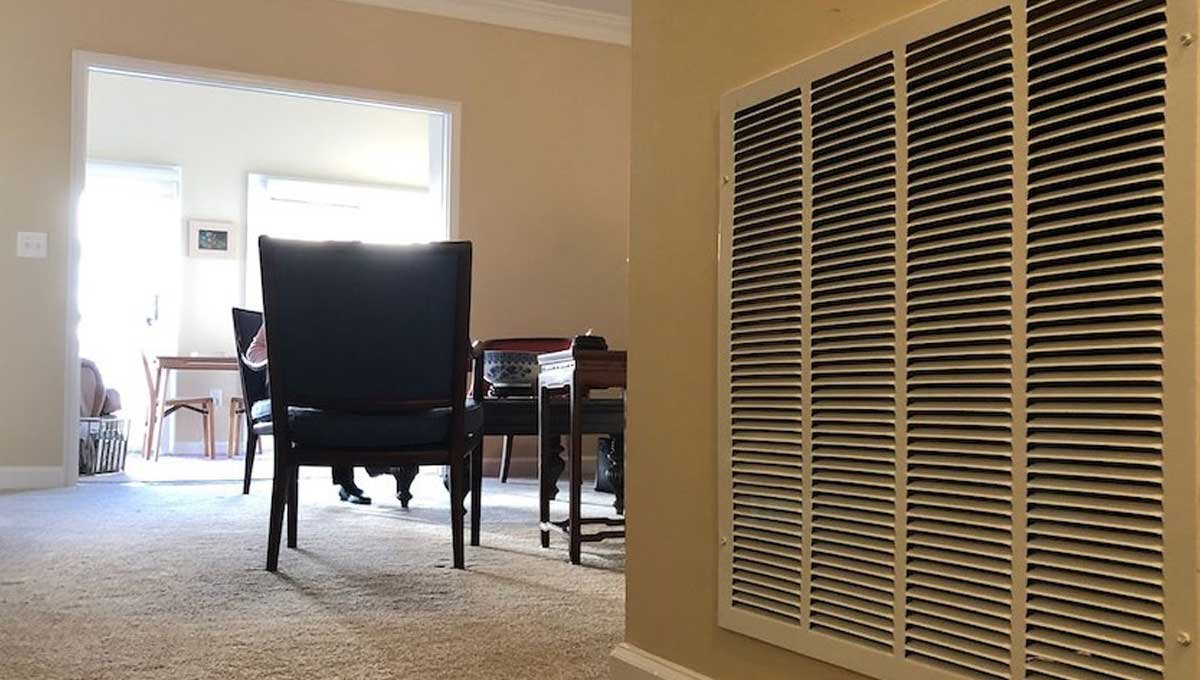
Many homes rely on a single central return grille, often located in a hallway or main living area. In some layouts, that works reasonably well. In others, it creates major comfort problems.
A single return may struggle to serve the whole home if:
- The floor plan has many closed rooms
- The home has multiple levels
- Long hallways separate living spaces
- Additions changed the original layout
- High heat gain affects some rooms more than others
In these homes, air may circulate well near the main return but poorly elsewhere. Rooms far from the return path lose cooling control faster because their air does not move through the system as efficiently.
The result is a home where some areas cool normally, while others feel disconnected from the system.
Poor Return Design Makes Airflow Feel Weak
Homeowners often describe comfort problems as weak airflow. They stand by a vent and notice that the air feels softer than expected. That can happen for several reasons, but poor return air design is one of the most common.
The blower needs balanced airflow to perform well. Once the return side becomes restricted, the system struggles to move the full volume of air it was designed to handle. That reduced movement affects supply performance throughout the house.
This often shows up as:
- Weak air from vents
- Slower room cooling
- Longer run times
- Greater temperature differences between rooms
Because the supply side is what people notice, they may assume the blower or ductwork is failing. In many cases, the return side is the hidden cause behind the weak cooling feel.
Poor Return Air Design Increases Pressure Imbalance
Air moves through a home best when pressure stays balanced. Poor return air design disrupts that balance. Rooms with strong supply airflow but weak return pathways often become pressurized. Other parts of the home may become more negative in pressure.
This pressure imbalance affects comfort in subtle but important ways. It can make certain rooms harder to cool, pull outdoor air into the home through gaps, and reduce the system’s ability to maintain stable indoor conditions.
Pressure imbalance may contribute to:
- Drafts around doors or windows
- Rooms that feel warmer than the rest of the house
- Air that feels heavier or less fresh
- Cooling that changes when interior doors are open or closed
These problems often look like general HVAC trouble, yet the real issue may be return air design that does not support normal air movement.
The Thermostat Cannot Fix a Return Air Problem
Homeowners often respond to uneven cooling by adjusting the thermostat. That is understandable. If the house feels warm, lowering the setting seems like the direct solution.
Still, the thermostat cannot solve a return air design problem. It can only tell the system to run longer. If the home has weak return pathways, longer run times may not restore balance. They may simply overcool the areas closest to the return while leaving other rooms uncomfortable.
This creates a frustrating pattern:
- The thermostat gets lowered
- The main area cools faster
- Distant rooms still lag behind
- The house feels uneven
- The thermostat gets adjusted again
This cycle continues because the system lacks the airflow support needed to cool the whole home evenly.
Hot Weather Exposes Return Air Problems Faster
Poor return air design often becomes more noticeable during extreme heat. Mild days may hide the issue because the system does not need to work as hard. Once temperatures rise, the weak points show up quickly.
The AC has to remove more heat from the home during hot afternoons and evenings. That requires strong, steady circulation. Homes with poor return air design lose cooling control faster because the system cannot keep indoor air moving efficiently under heavier demand.
In hot weather, return air problems often cause:
- Rooms are heating up faster than they cool down
- Extended run times with poor comfort improvement
- Upstairs spaces becoming difficult to control
- Greater dependence on constant thermostat changes
The hotter it gets, the more important return design becomes.
Return Air Problems Can Look Like Equipment Problems
One reason return air design is so often overlooked is that its symptoms overlap with other cooling issues. A home with poor return air design may appear to have:
- A weak air conditioner
- Low cooling output
- Dirty coils
- Poor thermostat response
- Duct issues
Those problems can be real, but the return side should not be ignored. Many systems lose cooling control faster, not because the equipment is failing, but because the air cannot complete the circulation loop properly.
This is why good diagnosis matters. Replacing parts will not fully solve a comfort issue caused by poor return design.
Common Signs of Poor Return Air Design
Return air design problems often show up in patterns. Homeowners may notice one or more of the following:
- Bedrooms feel warmer with doors closed
- Airflow changes when interior doors open
- Hallways cool better than private rooms
- Upstairs comfort falls off quickly during hot weather
- The system runs but the house never feels balanced
- Some vents feel weaker than others for no obvious reason
These clues often point to circulation limits, not just cooling equipment trouble.
Better Return Air Design Supports Better Cooling Control
A home cools more predictably when air can move freely back to the system. Good return air design supports steady circulation, balanced pressure, and more even comfort from room to room.
That can improve:
- Cooling consistency
- Room to room temperature balance
- Airflow strength
- Thermostat stability
- Overall indoor comfort
The goal is not simply to have cold air coming out of vents. The goal is to maintain control over how that air moves through the whole house. Return air design is a huge part of that.
Why the Return Side Deserves More Attention
The supply side gets the spotlight because people can see and feel it. The return side quietly determines how well the whole system functions. Once the return air design falls short, the AC loses control faster, especially in homes with long hallways, closed rooms, multiple levels, or uneven layouts.
Cooling problems do not always begin with the unit itself. Sometimes the home simply does not give the system the airflow path it needs to do its job properly.
That is why return air deserves more attention in comfort discussions. It shapes airflow, pressure, temperature balance, and how quickly the house starts feeling uncomfortable once outdoor heat rises. A home with poor return design may never feel fully stable, no matter how often the thermostat gets adjusted.