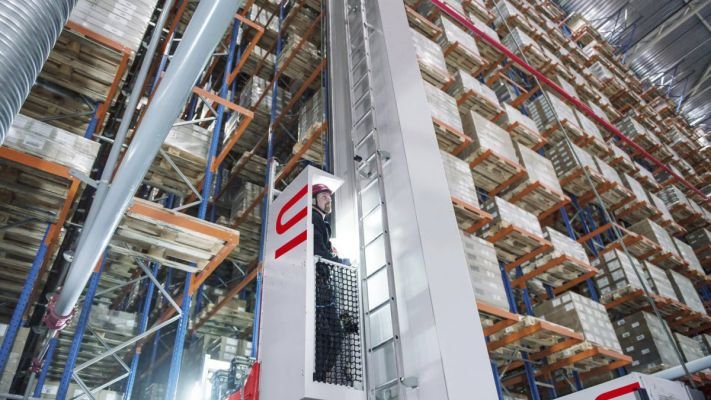
A well-organized warehouse does more than store products. It supports faster order fulfillment, safer workflows, better space usage, and smoother daily operations. As customer expectations continue to rise, businesses need practical systems that help teams work with greater accuracy and less wasted movement.
Two areas often make a major difference: palletizing and storage design. When these are planned properly, warehouses can reduce clutter, improve product handling, and create a more reliable flow from receiving to dispatch.
Contents
Why Warehouse Efficiency Starts with Better Product Handling
Every warehouse depends on the movement of goods. Products arrive, get stored, picked, packed, and shipped. When any part of this process is disorganized, delays quickly build up.
Poor handling can lead to damaged goods, misplaced inventory, slower loading times, and unnecessary labor. On the other hand, a structured product-handling approach helps teams know where items belong and how they should move through the facility.
This is where equipment planning becomes important. For example, choosing the right palletizer can help businesses handle stacked products more consistently while reducing strain on workers. It also supports a cleaner workflow, especially in facilities dealing with repetitive loading, packaging, or distribution tasks.
The Role of Palletizing in a Modern Warehouse
Palletizing is not just about stacking boxes. It affects transport stability, storage safety, and loading speed. A poorly built pallet can shift during movement, waste storage space, or slow down warehouse teams.
A good palletizing approach considers product weight, box size, pallet type, stacking pattern, and handling equipment. When these factors work together, pallets become easier to move, store, and ship.
Manual vs. Automated Palletizing
Manual palletizing may work for smaller operations with low product volume. However, as demand grows, manual stacking can become physically demanding and inconsistent. Workers may tire, stacking quality may vary, and operations may slow during busy periods.
Automated palletizing can help solve these challenges. It is especially useful for businesses that handle repeated packaging lines, high product volumes, or strict loading requirements. Automation also helps maintain consistency across shifts, which is valuable for warehouses that need predictable performance every day.
Making the Most of Available Warehouse Space
Space is one of the most valuable assets in any warehouse. Expanding a facility is expensive, so many businesses first look for ways to use their existing space better.
This often begins with reviewing layout, aisle width, racking systems, inventory placement, and traffic flow. Slow-moving items should not occupy prime picking areas, while fast-moving products should be placed where workers can access them quickly.
Businesses comparing the best palletizing systems should also think about how each system fits within the warehouse layout. A system that improves stacking but creates traffic bottlenecks may not deliver the best overall result. The goal is to improve both storage density and movement efficiency.
Vertical Storage and Smarter Layouts
Many warehouses underuse vertical space. Taller racking, mezzanine areas, and well-planned pallet positions can increase capacity without requiring a larger building. However, vertical storage must be planned carefully to avoid safety issues and access problems.
Clear labeling, proper aisle design, and suitable lifting equipment are essential. When workers can find and retrieve products easily, the warehouse becomes more productive without feeling crowded.
How Modern Storage Systems Improve Daily Operations
Storage systems influence nearly every warehouse activity. A strong storage setup helps reduce confusion, improve picking accuracy, and protect products from damage.
Modern systems may include selective racking, pallet flow racks, automated storage and retrieval systems, modular shelving, or integrated inventory tracking. The right choice depends on product type, order volume, available space, and budget.
Companies such as MPAC Group are often associated with operational improvement through modern packaging, automation, and handling solutions. For warehouses, this kind of thinking highlights the importance of connecting equipment, layout, and workflow instead of treating each area separately.
Connecting Storage with Workflow
A storage system should support the way products actually move. If popular items are stored far from packing stations, workers spend extra time walking. If receiving areas are too close to outbound lanes, congestion can happen. If pallets are stacked inconsistently, loading becomes slower.
The best warehouse layouts are designed around movement. They reduce unnecessary steps, keep pathways clear, and make it easy for teams to follow standard processes.
Key Factors to Consider Before Upgrading Systems
Before investing in new palletizing or storage equipment, businesses should review their current pain points. Common questions include:
What causes the most delays?
Where does product damage happen most often?
Which areas feel crowded or unsafe?
Are workers spending too much time searching for products?
Can the current system support future growth?
Answering these questions helps avoid unnecessary purchases. The most expensive system is not always the best one. The right system is the one that solves real operational problems and fits the warehouse’s daily needs.
Conclusion
Warehouse efficiency depends on more than speed. It requires smart product handling, safe storage, reliable workflows, and equipment that supports long-term growth. By improving palletizing processes and using space more strategically, businesses can create a warehouse that works better for both employees and customers.
A practical upgrade plan starts with understanding current challenges, then choosing systems that improve movement, safety, and organization. With the right approach, even an existing warehouse can become more productive, flexible, and easier to manage.
FAQs
What is palletizing in warehouse operations?
Palletizing is the process of arranging goods on pallets for storage, transport, or shipment. A good palletizing method improves stability, safety, and handling efficiency.
Why is warehouse space optimization important?
Space optimization helps businesses store more products, reduce clutter, improve workflow, and avoid unnecessary expansion costs.
Are automated palletizing systems suitable for small businesses?
They can be, depending on product volume and operational needs. Smaller businesses should compare costs, space requirements, and expected efficiency improvements before investing.
What makes a storage system effective?
An effective storage system keeps products organized, easy to access, protected from damage, and aligned with the warehouse’s daily workflow.
How can a warehouse improve efficiency without expanding?
A warehouse can improve efficiency by redesigning layouts, using vertical space, improving palletizing methods, organizing inventory by demand, and reducing unnecessary movement.