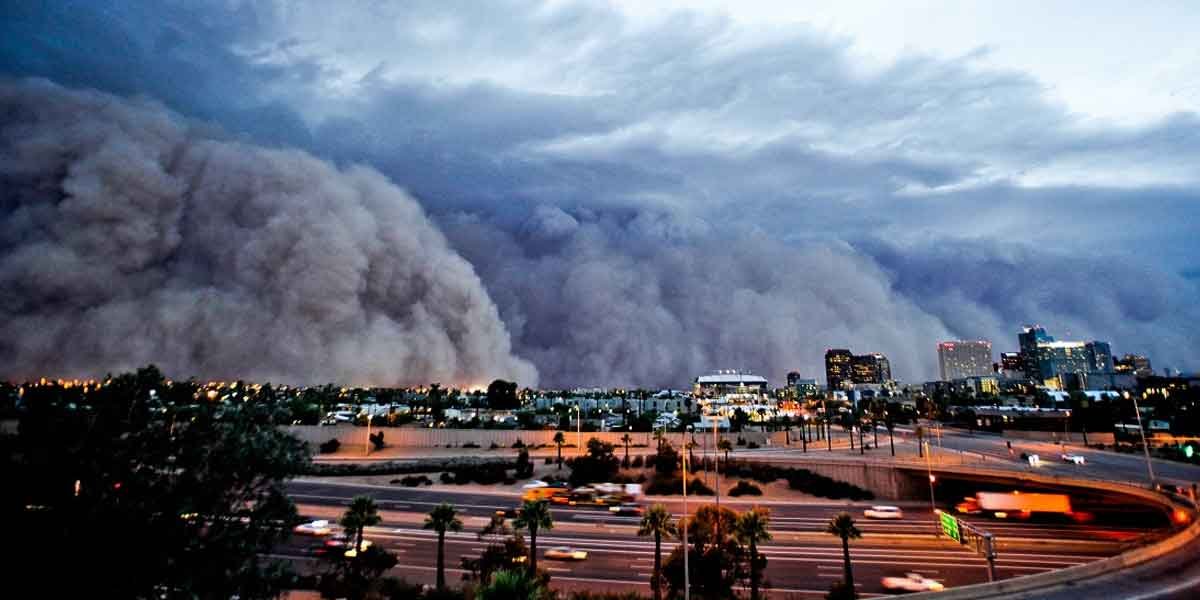
Most Sun City homeowners know haboobs arrive without much warning. What fewer residents think about is where the fine particulate from those events goes after the storm passes and the home is aired out. A significant portion settles inside the HVAC duct system, where it accumulates until a professional cleaning removes it. Over several years, the picture of what has built up in a Sun City home’s ductwork tells the story of every storm event, every monsoon season, and every month the HVAC system has run without attention to the duct interior.
Contents
- 1 What a Haboob Actually Deposits Into a Home’s Air System
- 2 How the HVAC Duct System Becomes a Holding Zone
- 3 Monsoon Season Adds a Biological Layer
- 4 Why Sun City Homes Are Particularly Susceptible
- 5 Signs That Sun City Ductwork Is Overdue for Professional Attention
- 6 What Professional Duct Cleaning Addresses
- 7 Building a Cleaning Schedule That Fits Arizona’s Conditions
What a Haboob Actually Deposits Into a Home’s Air System
A haboob is a wall of suspended particulate, predominantly silica sand and fine clay minerals lifted from the desert floor by outflow winds ahead of a thunderstorm. The particles range in size from PM10 (10 microns in diameter) down to PM2.5 (2.5 microns and below). At 2.5 microns and smaller, particles are small enough to penetrate most door seals, window frames, and utility penetrations in a home’s building envelope even when every window and door is closed.
These particles enter the home through the same infiltration points that compromise any building envelope, and once inside, the HVAC system draws them in through return air vents with every operating cycle. The filter captures the larger particles, but fine PM2.5 and sub-PM2.5 silica passes through standard MERV 8 filters and continues into the ductwork, where it settles on interior duct walls, diffuser baffles, and register openings. Each haboob event adds a layer. The Maricopa County area averages several significant haboob events per season, and Sun City sits in the West Valley directly in the path of the southwesterly flow that produces the most intense events.
How the HVAC Duct System Becomes a Holding Zone
Air moves through a duct system at velocity. When a blower fan runs at lower speed, which is common during mild temperature conditions or during fan-only mode, velocity drops and particles that were previously suspended in the airstream settle onto duct surfaces. Horizontal duct runs accumulate more than vertical sections. Return duct pathways, which carry unfiltered room air back toward the air handler before it reaches the filter, are exposed to every particle that the filter has not yet captured.
Over a season, this accumulation becomes substantial. Over several seasons without professional cleaning, the duct interior develops a visible coating of mixed particulate that includes desert silica, pollen, household dust, and biological material from monsoon season humidity events. Each time the HVAC system starts a new operating cycle, airflow turbulence disturbs the settled surface layer and re-suspends a portion of it back into the airstream circulating through the home.
Monsoon Season Adds a Biological Layer
After the haboob season comes the monsoon season, which runs from mid-June through September. The Sonoran Desert’s dramatic humidity spikes during monsoon thunderstorm events create condensation-friendly conditions inside the duct system, particularly near cooling registers where conditioned air meets warmer duct surfaces. Biological material carried by storm winds, including mold spores and bacteria, enters the home during these events and finds its way into the duct system through the same infiltration pathways as haboob particulates.
Mold established on evaporator coil surfaces during a humidity event distributes spores into the duct system with each subsequent cooling cycle. Combined with the silica and mineral deposits from haboob season, the duct environment after a full Arizona season represents a substantially different condition than when the home was first occupied. This cycle repeats each year, and each layer compounds the one before it in homes that have not been professionally cleaned.
Why Sun City Homes Are Particularly Susceptible
Several characteristics specific to Sun City homes make duct accumulation more pronounced than in a typical residential context. Many Sun City homes were built in the 1960s through 1980s, when duct installation standards differed from current practice. Older flex duct systems with inner liner deterioration and metal duct systems with unsealed connections accumulate dust and debris more readily than modern sealed duct installations.
The 55+ community’s characteristic quiet is also relevant from an HVAC perspective. Sun City residents who are home most of the day run their HVAC systems for more total hours annually than working households, which means more air movement through the duct system, more filtration cycles, and more opportunities for particulate loading to accumulate. Homes with pets, with frequent cooking, or with carpeting add additional organic particle loads to the mix.
Signs That Sun City Ductwork Is Overdue for Professional Attention
- Visible dust discharge from supply registers when the system starts a new cycle
- Musty or earthy odor from supply vents, particularly in the weeks after a monsoon event
- Noticeably faster dust accumulation on surfaces near supply registers than in other areas of the home
- Increased allergy or sinus symptoms when indoors compared to outdoors during the same season
- Reduced airflow at supply registers compared to earlier years, despite a functioning blower and clean filter
- No documented duct cleaning history in the past 3 to 5 years, or ever for a resale home
What Professional Duct Cleaning Addresses
Professional duct cleaning uses high-velocity vacuum equipment connected to the main trunk lines while technicians work through the branch runs with compressed air tools, dislodging and capturing the accumulated layer of particulate from duct interiors. The process covers supply ducts, return ducts, plenums, and the air handler interior including the blower wheel, which accumulates its own significant load of fine particulate over time.
The NADCA (National Air Duct Cleaners Association) standard requires source removal of debris from all accessible ductwork surfaces rather than simply dislodging and recapturing from one central point. Homeowners evaluating providers should ask for source-removal methodology and before/after documentation of the cleaning scope.
Building a Cleaning Schedule That Fits Arizona’s Conditions
Sun City homeowners can schedule professional duct cleaning in Sun City, AZ on a three to four-year interval under normal conditions, with more frequent attention warranted after a renovation or construction project that introduced debris into the home, after a major haboob event with known interior infiltration, or following a monsoon season with confirmed mold growth on the evaporator coil.
Combining duct cleaning with the annual HVAC maintenance visit is a practical scheduling approach that keeps both the distribution system and the mechanical components in good condition through Arizona’s demanding seasonal cycle. A clean duct system supports more effective filtration, more consistent airflow, and a more accurate picture of indoor air quality between professional service intervals.