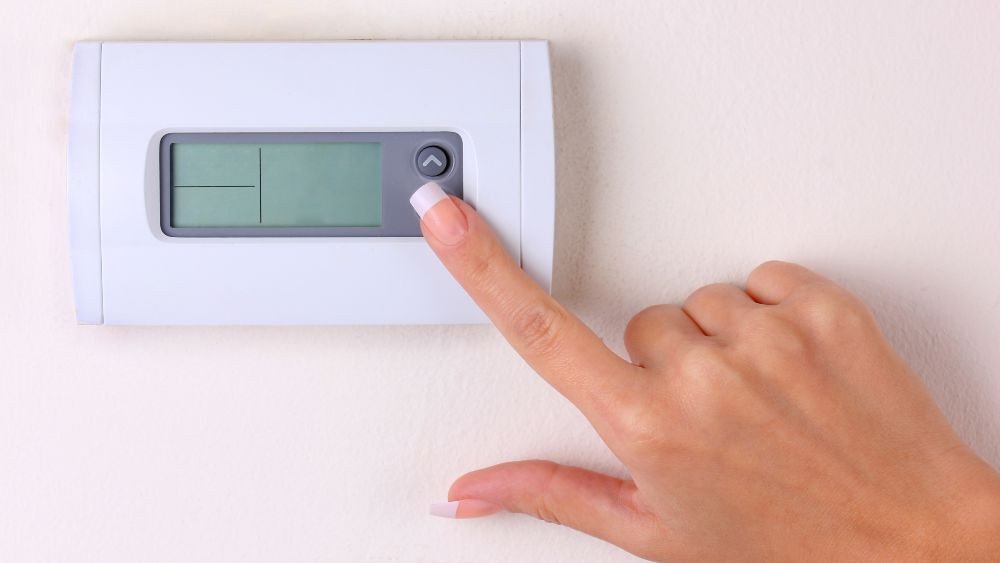
A blank Honeywell thermostat screen means the thermostat has no power. The question is where the power was supposed to come from, and why it stopped. Honeywell thermostats are powered by one of three sources: AA or AAA alkaline batteries, 24-volt AC power from the HVAC system delivered through a C-wire (the common wire, usually blue or black), or power stealing — a method where the thermostat draws a small current through the control circuits without a dedicated C-wire. Each power source fails in a different way, and identifying which source your thermostat uses tells you where to look for the failure.
The first diagnostic question is not “what is wrong with the thermostat.” It is “how was this thermostat getting power?” A battery-powered thermostat goes blank when the batteries die — replace them. A C-wire-powered thermostat goes blank when the HVAC system loses power — check the furnace switch and breaker. A power-stealing thermostat goes blank when the control circuit it is stealing from opens — a safety switch has tripped, a contactor coil has failed, or the furnace door is ajar. The fix is specific to the power source, and replacing the thermostat without identifying the power source guarantees the new thermostat will be blank too.
Contents
- 1 How to Identify Your Honeywell Thermostat’s Power Source
- 2 1. Battery-Powered Thermostats: The Most Common Cause
- 3 2. C-Wire Powered Thermostats: The HVAC System Is Off
- 4 3. Power-Stealing Thermostats: The Circuit Opened
- 5 4. Honeywell Smart and WiFi Thermostat Blank Screens
- 6 5. Blown Furnace Control Board Fuse
- 7 FAQ: Common Questions About Blank Honeywell Thermostats
- 8 Identify the Power Source, Then Fix the Interruption
How to Identify Your Honeywell Thermostat’s Power Source
| Power Source | How to Identify | Goes Blank When | Common Honeywell Models |
| Batteries only | No C-wire connected; uses AA or AAA | Batteries die | RTH series, basic programmable |
| C-wire (24V system power) | Blue or black wire on C terminal | HVAC system loses power | T9, T10, Lyric, WiFi models |
| Power stealing (no C-wire, no batteries) | No C-wire, no battery compartment | Control circuit opens | Older digital non-programmable, some T-series |
| Hybrid (batteries + C-wire backup) | Both batteries and C-wire present | Both power sources fail | RTH9585WF, some WiFi models |
1. Battery-Powered Thermostats: The Most Common Cause
A Honeywell thermostat that runs on batteries has no electrical connection to the HVAC system for its own power needs. The batteries run the display, the processor, and the relays that switch the heating and cooling circuits. When the batteries drain, the thermostat goes blank — not dim, not flickering, but completely dark. The thermostat cannot send a call for heat or cool with dead batteries because the relays require power to close.
Replace the batteries with fresh alkaline batteries. Do not use rechargeable batteries — their 1.2-volt nominal voltage is below the thermostat’s minimum operating threshold of roughly 1.4 volts per cell. If the screen powers on after battery replacement, the old batteries were dead. If the screen remains blank, the thermostat’s internal power supply circuit may have failed, or the battery contacts inside the thermostat are corroded. Inspect the metal battery contacts for white or green corrosion. Clean them with a cotton swab dipped in white vinegar, let them dry, and reinstall the batteries. If the screen is still blank, the thermostat has failed and must be replaced ($25 to $80).
Why Honeywell thermostats eat batteries faster than you expect: A basic Honeywell thermostat draws roughly 10 to 50 microamps in standby and 50 to 200 milliamps when switching a relay. Alkaline AA batteries in this application last 6 to 12 months. A Honeywell WiFi thermostat that is battery-powered draws significantly more current — the WiFi radio consumes power continuously — and batteries may last only 3 to 6 months. If your thermostat is eating batteries every few weeks, the thermostat’s internal power supply is failing and drawing excessive current, or you are using low-quality batteries.
2. C-Wire Powered Thermostats: The HVAC System Is Off
A Honeywell thermostat with a C-wire draws its operating power from the 24-volt AC transformer inside the furnace or air handler. The C-wire is the common return path that completes the 24-volt circuit. When the furnace or air handler loses power — a tripped breaker, a turned-off service switch, or a tripped safety switch — the 24-volt transformer is de-energized, the C-wire carries no voltage, and the thermostat goes blank. The thermostat itself is fine. The HVAC equipment is not sending it power.
Check the obvious power interruptions first: the furnace or air handler service switch (the light-switch-style toggle on the side of the unit), the circuit breaker in the main electrical panel, and the service disconnect box near the outdoor condenser. If the HVAC equipment has power and the thermostat is still blank, measure the voltage between the R and C terminals at the thermostat wall plate with a multimeter. It should read 24 volts AC plus or minus 3 volts. If it reads 0 volts, the 24-volt circuit is open somewhere between the transformer and the thermostat. The most common causes: the furnace door switch is not fully closed, a condensate float switch has tripped, or the 3-amp or 5-amp fuse on the furnace control board has blown. The fuse on the control board is a small automotive-style blade fuse. If it is blown, something on the 24-volt circuit drew too much current — typically a shorted thermostat wire where it passes through the wall or the furnace cabinet. Replace the fuse and inspect the wiring for a bare spot touching grounded metal.
3. Power-Stealing Thermostats: The Circuit Opened
A power-stealing Honeywell thermostat has no C-wire and no batteries. It draws the tiny current needed to run its display and processor by passing a small current through the heating or cooling control circuit even when the system is off. The current is small enough — typically a few milliamps — that it does not energize the relay or contactor it is passing through. When the control circuit opens — because a safety switch trips, a relay coil fails, or the furnace door is open — the current path is broken, and the thermostat loses power.
Power-stealing thermostats are the most frustrating to diagnose because they work perfectly for years and then go blank for no apparent reason. The most common cause is a float switch on the condensate drain or an open furnace door switch — either of which breaks the 24-volt control circuit that the thermostat is stealing power through. Check the furnace door, the condensate pump, and any safety switches wired in series with the thermostat. If the thermostat goes blank only when the system switches between heating and cooling modes, the relay or contactor that the thermostat steals power through in one mode may have a failing coil that opens the circuit intermittently. The permanent fix for a power-stealing thermostat that repeatedly goes blank is to run a C-wire from the furnace to the thermostat, converting it from power-stealing to C-wire powered.
4. Honeywell Smart and WiFi Thermostat Blank Screens
Honeywell T9, T10, Lyric, and WiFi-capable thermostats have a more complex power architecture than basic models. The WiFi radio, the color touchscreen, and the processor draw more current than a power-stealing circuit can reliably provide, which is why these models require a C-wire or include a C-wire adapter in the box. When a Honeywell smart thermostat goes blank, the cause is almost always a loss of C-wire power — even if the thermostat has backup batteries, the screen and WiFi radio require more power than the batteries can supply.
A Honeywell smart thermostat that goes blank but can still be controlled from the Honeywell Home app has not actually lost all power. The WiFi module and the low-power processor are running on a small amount of residual power from the C-wire or the batteries, but the high-current display backlight has shut down. The thermostat is in a low-power survival mode. The display may come back on its own when the C-wire voltage returns to normal, or it may require a hard reset: remove the thermostat from the wall plate, wait 30 seconds, and snap it back on. If the display stays off but the app still works, the display itself has failed and the thermostat must be replaced.
5. Blown Furnace Control Board Fuse
The furnace or air handler control board has a small automotive-style blade fuse — typically 3 amps or 5 amps, purple or orange in color — that protects the 24-volt circuit. When this fuse blows, all 24-volt power is lost: the thermostat goes blank, the contactor will not close, and the furnace or air handler will not respond to any thermostat signal. The fuse blows when the 24-volt circuit is shorted to ground, most commonly because a thermostat wire has been pinched between the furnace cabinet panels, a screw has been driven through a thermostat wire inside a wall, or the outdoor condenser contactor coil has shorted internally.
Locate the control board inside the furnace or air handler. The fuse is on the board, near the terminal strip where the thermostat wires connect. Pull it out and inspect it. A blown fuse has a visible break in the metal strip inside the plastic housing. Replace it with an identical fuse — same amperage, same physical size. If the replacement fuse blows immediately, there is an active short circuit. Do not install a larger fuse. The fuse is 3 or 5 amps for a reason. Installing a 10-amp fuse to stop it from blowing will not fix the short. It will allow enough current to flow to overheat the transformer, the thermostat wires, and the control board — causing a fire. Find the short or call a technician. Do not bypass the fuse.
FAQ: Common Questions About Blank Honeywell Thermostats
Why does my Honeywell thermostat go blank sometimes and then come back on?
Intermittent blanking is caused by an intermittent power interruption — a loose wire connection at the thermostat or the furnace, a furnace door switch that is not fully engaged and loses contact when the blower vibrates, or a condensate float switch that teeters on the edge of tripping and resets when the water level fluctuates. Power-stealing thermostats are particularly prone to intermittent blanking because the current they steal is so small that any increase in resistance in the circuit — from a slightly corroded connection — drops the voltage below the thermostat’s minimum operating threshold. The fix is to tighten every wire connection at the thermostat and the furnace, verify the furnace door is fully seated, and clear the condensate drain if a float switch is present.
My thermostat went blank after a power outage and won’t come back on. What happened?
A power surge during the outage or when power was restored may have blown the 3-amp or 5-amp fuse on the furnace control board. Check the fuse. If the fuse is intact, the power surge may have damaged the thermostat’s internal power supply. Try a hard reset: remove the thermostat from the wall plate, remove the batteries, wait 30 seconds, reinsert the batteries, and snap the thermostat back on. If the screen remains blank and the fuse is good, the thermostat was damaged by the surge and must be replaced. A surge protector installed at the furnace service switch prevents this in the future.
Identify the Power Source, Then Fix the Interruption
A blank Honeywell thermostat has lost power. The power comes from batteries, a C-wire, or a power-stealing circuit. Replace the batteries first — this fixes the majority of blank screens in 30 seconds. If there is a C-wire, check the furnace service switch, the circuit breaker, and the control board fuse. If the thermostat has no batteries and no C-wire, it is power-stealing, and the circuit it steals from has opened — find the tripped safety switch or the loose wire and close the circuit.
A blank thermostat is almost never a failed thermostat. It is a power interruption upstream of the thermostat. Replace the batteries, reset the breakers, close the furnace door, tighten the wire connections, and replace the fuse. The thermostat will power on. If it does not, the thermostat has genuinely failed, and a replacement costs $25 to $80 — one of the cheapest components in the entire HVAC system and one of the easiest to replace.